
Our pledge to work towards achieving a climate-positive campus is aligned with how we serve our students and the world that they will inherit. Every part of our capital planning incorporates sustainability. From the materials we choose to the source of energy our buildings use to lighting and window choices, we are thinking about the planet’s future.
The Victoria University Sustainability Committee, led by the Department of Infrastructure and Sustainability, was established in 2018 and promotes multi-disciplinary sustainability initiatives across campus in partnership with students, faculty, staff and external stakeholders.
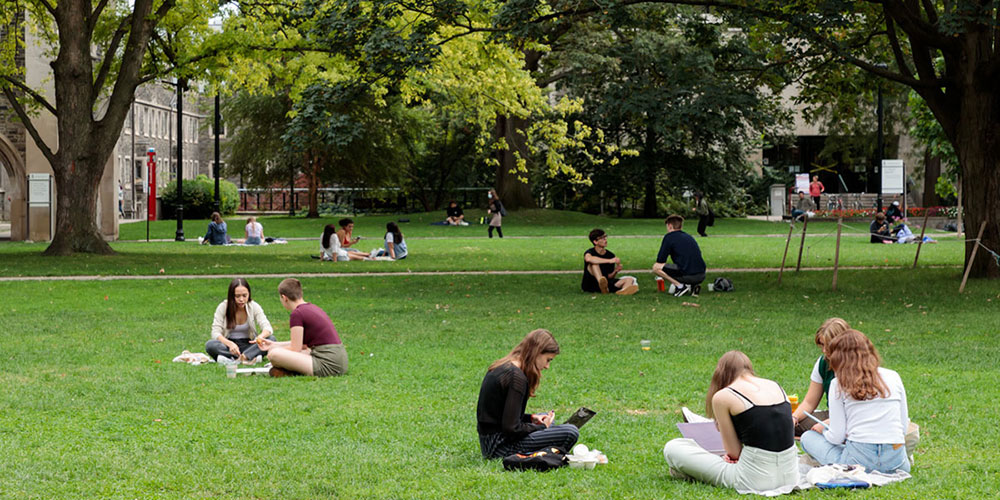
Community Engagement Initiatives
- Increased student representation and meetings in the Sustainability Committee
- Established the Department of Infrastructure and Sustainability
- Broadend funding eligibility with the Sustainability Fund
- Published strategic reports on zero-waste initiatives
- Formed the Vic Sustainability Committee
- Promoted recycling and waste diversion programs
- Developed a climate action plan with U of T and Vic stakeholders (ongoing)
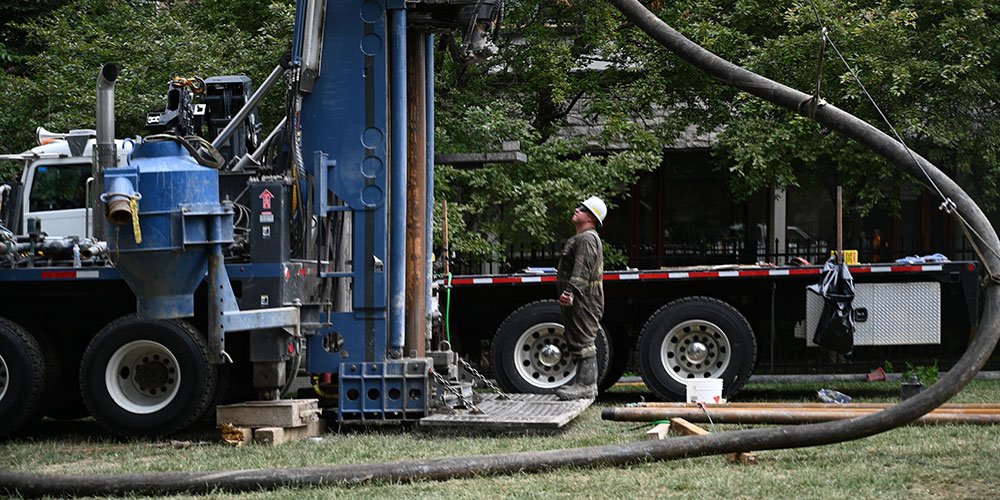
Sustainable Energy Solutions
- Victoria University ends ownership of land bequeathed to the University in 2003, which had on its property, an oil well
- Victoria University commits to divesting from fossil fuel producers
- Windows replaced/refurbished at Annesley Hall residences, Bowles/Gandier house, Lillian Massey building, McKinsey building
- Replaced chiller for energy-efficient air conditioning at E.J. Pratt Library
- Lighting retrofitted to LED throughout campus (ongoing)
- Replaced campus exterior lamp posts with energy-efficient lighting
- Replaced fan coil units in Upper Burwash rooms
- Replaced air conditioning unit for Victoria College mailroom
- Stage lighting retrofitted to LED in the Isabel Bader Theatre
- All new electrical lighting fixtures are to be LED
- Installed Variable Speed Drive in building ventilation fans and pump motors
- Build automation systems for scheduling and remote monitoring
- Installed motion sensor lights where possible
- Use high-efficiency mechanical and electrical equipment
- Replaced fan coil units in Rowell Jackman Hall
- Replaced the air-cooled chiller on the roof of the Lillian Massey building
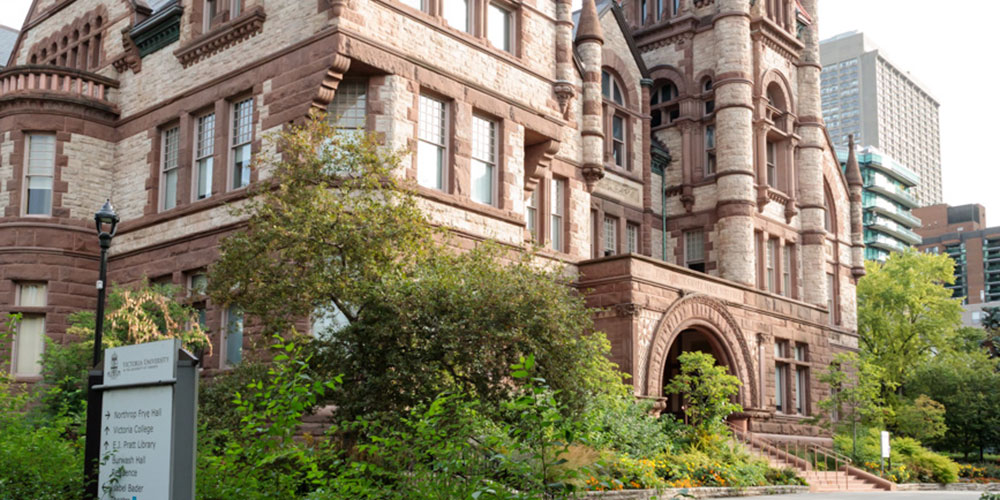
Waste Reduction and Recycling
- Installed water bottle filling stations across campus:
- Victoria College: one in the basement.
- Goldring Student Centre: three on the second floor, one in the sub-basement and one in the cafeteria.
- Emmanuel College: one in the basement.
- Isabel Bader Theatre: one in the first-floor lobby.
- Northrop Frye Hall: one on each of the basement, first, second and third floors.
- EJ Pratt Library: one on the first floor and one in the basement.
- Added larger signage on recycling bins in Rowell Jackman Hall
- Compost bin pilot project started at Annesley Hall
- Gradual replacement of bottled water with Tetra Pak alternatives
- Separation of compostables, recyclables, and trash in food service areas
- Use of locally sourced produce whenever possible
- Gradual move from disposable food containers to more eco-friendly alternatives
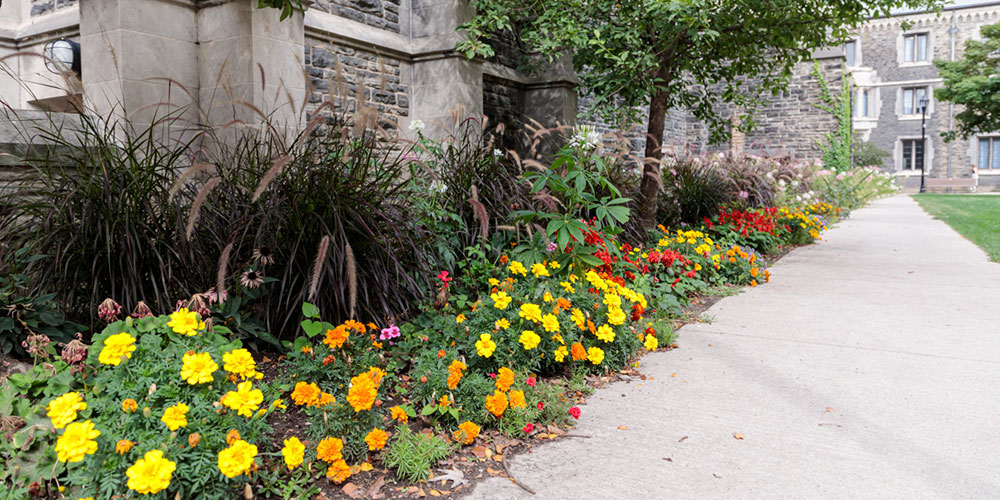
Water Conservation
- Installed sub-meters for irrigation systems
- Plumbing fixtures replaced with low-flow alternatives
- Programmed sprinkler systems for improved and optimized irrigation
Sustainability Committee Annual Reports
Initiatives for 2024-2025
- Launch transition to carbon-neutral Sugar Sheet printing at Vic U Print Shop. Sugar Sheet paper will align with climate action initiatives, preserve forest and animal habitats and eliminate all carbon emissions from copy paper usage by recycling sugar cane waste called Bagasse. Expect the transition to Sugar Sheet printing to be complete by December 2025.
- Retained environmental consultant Blackstone Energy Services through competitive Request for Proposals process to develop a robust Net Zero 2050 plan, solidify achievable decarbonization targets backed by a long-term transition strategy and near-term actionable solutions and incorporate infrastructure health and facility condition through clean capital renewal measures.
- Include sustainability matrix in all future major renovations and deferred maintenance projects to support Net Zero 2050 plan.
- Replace and optimize two chilled water distribution pumps at Victoria College to enhance building HVAC energy efficiency and effective cooling throughout the building.
- Upgrade glycol system heat exchanger for building heating at Victoria College to improve temperature control and energy efficiency.
- Renovate plumbing fixtures in custodian rooms at Victoria College to low-flow systems with enhanced functionality and water efficiency.
- Replace and optimize steam-to-hot-water distribution system and pumps for building heating at the Isabel Bader Theatre to enhance energy efficiency.
- Complete exterior windows project in First House to improve energy efficiency, safety and reduce drafts. This will be the last of the four houses for heritage windows replacement or refurbishment at Lower Burwash Residences.
- Carry out pilot waste reduction initiative in collaboration with VUSAC Sustainability Commissioner Justin Liou and co-chair Anandita Vishnoi. Will partner with ChopValue to recycle about 4,000 pairs of used bamboo chopsticks per year, transforming them into furniture.
- Retrofit Burwash Dining Hall dishwashing machine and cold storage freezers to increase energy efficiency.
- Implement educational initiatives to encourage students and staff to use reusable containers, including signage and programs. In the Lug a Mug program at Ned’s Cafe, patrons will receive a 25-cent discount for using their own reusable mug for hot beverages.
- Introduce smaller-sized napkin dispensers in catering to reduce paper consumption and lower carbon footprint.
- Revise local produce procurement target to 40 per cent from 30 per cent in 2023-24 to promote sustainability and support local farmers.
- Increase food service menus, including catering towards 60 per cent vegan and vegetarian content from 45 per cent in 2023-24 to enhance sustainability. Will collaborate with Forward Foods, Greener by Default and Canada Humane Society to promote vegetarian and vegan food consumption.
- Aim to achieve 100 per cent digital storage of records to minimize paper and printer ink usage. Currently storing 75 per cent of records digitally.
- Divert a significant amount of leftover food to programs like Eat After Eight to support students in need and reduce food waste. All Food Services outlets, including catering, Ned’s Express kiosk and Ramadan meals kiosk, will contribute to this initiative.
- Deploy service-centric strategies in catering during events to reduce waste of food and supplies, including using smaller service utensils and plateware and staggering food replenishment.
Sustainability Annual Report 2023-24: Energy Savings and Sustainability Initiatives
- Vic U became a member of the Blue Community, recognized water and sanitation as human rights, phased out the sale of single-use plastic bottled water and promoted publicly funded, owned and operated water and wastewater services. Installed additional water filling stations throughout campus.
- Completed Margaret Addison Hall field geothermal mass installation feasibility and geotechnical report.
- Published the final Vic U mechanical and electrical design and sustainability standards to promote sustainability.
- Completed competitive Request for Proposals process to environmental consulting firms to develop Vic U 2050 Net Zero plan.
- Converted existing lighting to high-efficiency LED in Victoria College and Emmanuel College.
- Conducted an engineering study to determine the integrity of the potable water supply system in Emmanuel College, ensured branch piping integrity and addressed deteriorated sections of piping as part of overall water conservation.
- Replaced or refurbished windows at Caven House to improve energy efficiency of heritage site and reduce drafts. This was the third of the four houses at Lower Burwash Residences. The final house was completed in the Summer of 2025.
- Replaced conventional roof in the E.J. Pratt Library with higher-efficiency insulated roof to reduce heating and cooling loads and save energy.
- Replaced the electric domestic water heaters in the basement of Isabel Bader Theatre with a higher-efficiency system per enhanced sustainability design standards.
- Replaced day-to-day aging grounds equipment from gasoline to clean electricity to reduce greenhouse gas emissions (GHG).
- Converted natural gas-fired domestic hot water heaters at Upper Burwash Residence to clean electricity to reduce GHG emissions.
- Carried out an annual organic waste audit led by the Food Services team in collaboration with Infrastructure and Sustainability to implement and improve waste diversion initiatives.
- Collected, managed and returned alcohol empties for a refund to Beer Store to further promote recycling and waste diversion.
- Maintained production logs in the Burwash Dining Hall kitchen to ensure accurate forecasting, avoid overproduction and minimize food waste.
- Received Food Services supplies in bulk rather than individual portions where possible to reduce environmental impact by cutting down on individual packaging.
- Introduced compostable and biodegradable Eco containers program for takeout food at Burwash Dining Hall and Ned’s to enhance waste diversion. Ensured all disposables were 90 per cent compostable and biodegradable.
- Achieved local produce procurement target of 30 per cent in Food Services to reduce carbon footprint and support local farmers.
- Ensured major suppliers were leaders in sustainability practices in their own areas (e.g., GFS, Ecolab and Go Green Go) and aligned with Vic U’s Sustainability Initiatives.
- Stored 75 per cent of records in digital form to minimize paper and printer ink usage and reduce carbon footprint.
- Maintained 4 per cent of the Food Services menu designated as vegetarian or vegan to enhance sustainability.
- Collaborated successfully with VUSAC on Meals after Eight program twice a week to mitigate food waste and food insecurity.
- Made reusable tableware available for catering events without a rental fee to discourage the use of disposable tableware.
Sustainability Annual Report 2022-23: Energy Savings and Sustainability Initiatives
- Installation of two electric vehicle charging stations in Rowell Jackman Hall available to monthly pass holders to promote sustainable commute.
- Replacement/refurbishment of windows at Bowles Gandier House to improve the energy efficiency of the heritage site and reduce drafts.
- Continuation of replacement of bathroom plumbing fixtures with new low flow fixtures in Lower Burwash Hall residence to reduce water consumption.
- Preparation of scope of work to replace/refurbish windows at First House (2024) and Nelles House (2025) to improve energy efficiency and reduce drafts.
- Replacement of the domestic water circulation pump in the Isabel Bader Theatre to a higher efficiency motor.
- Conversion to energy-efficient electric source from steam for domestic hot water system in E.J. Pratt Library.
Sustainability Annual Report 2021-22: Energy Savings and Sustainability Initiatives
- Continuing promotion of recycling and waste diversion program from the Sustainability Committee such as the feasibility of a standardized 3-compartment garbage bins and the possible introduction of incentive programs (i.e. “bring your own mug”) via education.
- Installation of sub-meters for the campus-wide irrigation systems to create a baseline and allow remote readings taken regularly, and mitigate water waste.
- Creation of Mechanical, Electrical and Construction design standards for Victoria University in compliance with The Energy Modelling Standards. New construction and major renovations where applicable must meet or exceed prescribed energy efficiency standards.
- Replacement/refurbishment of windows at Annesley Hall residences to reduce heat loss/drafts and to protect the integrity of this heritage structure.
- Replacement of kitchen and bathroom plumbing fixtures with new low flow fixtures in Lower Burwash Hall Residence.
- Energy efficiency feasibility study to install a geothermal system at the Margaret Addison Hall field; phase 1 completed and phase 2 to start in 2022. Phase 2 includes drilling of boreholes for soil samples and suitability, scheduled for summer 2022.
- Refurbishing of exterior windows at McKinsey building to reduce heat loss, increase efficiency and building structure integrity.
- Replacement of chiller for air conditioning systems in the EJ Pratt Library with energy efficient chiller resulting in $15,000 in energy reduction rebate from save-on-energy program. Going forward, reduction in hydro consumption at EJ Pratt through summer cooling season.
- Sustainability Committee terms of reference modified to increase student representation by two and addition of one sustainability meeting a year to three Sustainability Committee meetings a year
- Creation of the department of Infrastructure and Sustainability to align with the University’s strategic plan and its pillars.
- The Geothermal Fund becomes the Sustainability Fund to broaden funding eligibility for a variety of sustainability initiatives, feasibility studies and waste diversion.
Sustainability Annual Report 2020-21: Energy Savings and Sustainability Initiatives
- Publication of “Vic Zero Waste: Our Mission” strategic report by VUSAC Sustainability Commission in November 2020.
- On-going lighting retrofits throughout campus to LED such as in the Isabel Bader Theatre, Burwash Houses hallways, Annesley Hall hallways.
- Replacement of all campus exterior lamp posts with LED energy efficient lighting; all fixtures programmed to accommodate seasonal variations to enhance safety.
- Replacement/refurbishment of all windows at Bowles/Gandier house to reduce heat loss/drafts and to protect the integrity of this heritage structure.
- Replacement of fan coil units in Upper Burwash rooms, common areas, stairwells and service rooms. New units are specified with energy-efficient motors.
- Replacement of the air conditioning unit for Victoria College mailroom with higher efficiency electric motors.
Sustainability Annual Report 2019-20: Energy Savings and Sustainability Initiatives
- Installation of bottle water filling stations to reduce plastic water bottle waste at Emmanuel College, Victoria College, Burwash Dining Hall Servery, Goldring Student Centre Commuter Lounge.
- Larger signage was installed in Rowell Jackman Hall on blue recycling bins to promote waste diversion.
- Presentation of “Vic Zero Waste: Our Mission” project by VUSAC Sustainability Commission to Sustainability Committee aiming to promote education to students and residents related to organic and recycling waste streams.
- Installation of compost bin pilot on the second floor of the kitchen of Annesley Hall, received positively. Further discussion at Sustainability Committee meetings to expand composting at campus.
- Replacement of the building heating and domestic hot water equipment in Burwash Hall residences with variable speed drive pump motors to reduce energy consumption.
- Creation of a designated tab on sustainability on the University website to highlight sustainability initiatives.
Sustainability Annual Report 2018-2019: Energy Savings and Sustainability Initiatives
- Forming of Vic Sustainability Committee, with terms and references.
- Active promotion of recycling and waste diversion via our Sustainability Committee.
- Bottle filling station installation in the EJ Pratt Librar, Isabel Bader Theatre and Cat’s Eye.
- Washroom upgrades in Burwash Dining Hall, Annesley Hall and Emmanuel College: washroom fixtures have low flow and washbasins have been equipped with motion sensors.
- Window refurbishment in Lillian Massey building.
- Stage lighting retrofit to LED in the Isabel Bader Theatre; completion expected in next two months.
- All new electrical lighting fixtures to be LED.
- All new and replacement of building ventilation fans and pump motors to have Variable Speed Drive to ensure maximum efficiency at all load conditions: Isabel Bader Theatre, Annesley Hall and Rowell Jackman Hall already undertaken.
- Building Automation systems must facilitate scheduling of heating, ventilation and air conditioning systems as per occupancy in academic sites. Future improvements to include remote monitoring of all systems, including utilities use.
- Motion sensor lights in as many spaces as safely possible.
- Programmed sprinkler systems for grounds irrigation to reduce water usage.
- All new mechanical and electrical equipment must be rated as high efficiency.
- Replacement of fan coil units in Rowell Jackman Hall: 137 digital thermostats with high efficiency motors.
- Replacement of air-cooled chiller on roof in Lillian Massey building using high efficiency unit, less kilowatts compared to old chiller.
Future initiatives:- Consideration for sub-metering of energy use (mechanical and electrical) in all buildings.
- Installation of water meters to the feeds for grounds sprinkler systems to accurately note usage.
- All campus exterior lamp posts (approx. 125) to be replaced with LED lighting in next two to three years in phased projects. All fixtures will also be programmed to accommodate seasonal variations.
- Creation of Mechanical, Electrical and Construction design standards for Victoria University in compliance with The Energy Modelling Standard that must be met for new designs, new construction and major renovations. We expect to have these standards formalized in one year.
- Within next two years, have a third party consultant carry our Energy Audits of all our facilities and compare results data to peer facilities to measure energy efficiency performances.
- Continue with bottle water filling stations installation at all our facilities to reduce plastic water bottle use.
- Starting in 2020, carry out multi-year projects to replace/refurbish all windows at Burwash Hall residences to reduce heat loss/drafts and to protect the integrity of this heritage structure.
- Within one year, engage an Energy Efficiency Consultant to carry out feasibility of installing a Geo Thermal system and Solar panels at our Campus.
- Continue with lighting retrofits throughout campus to LED.
- Designated tab for sustainability on this website.
Sustainability Committee Terms of Reference
Sustainability Committee: Terms of References February 2025
February 2025 (PDF)
Terms of Reference and Membership for The Sustainability Committee at Victoria University
Terms of Reference to include two sections:
- Membership
- Mandate
Membership
- Associate CAO, Infrastructure and Sustainability (Chair of the Committee)
- Chief Administrative Officer and Bursar
- Associate CAO, Financial and Revenue Services
- Associate Director, Hospitality Services
- One representative from the Office of the Dean of Students
- VUSAC Sustainability Commissioner elected by members of VUSAC
- VUSAC appointee, Sustainability Co-Chair
- ECSS Sustainability Chair elected by members of ECSS
- One student representative from the Residence Councils (appointed by VUSAC in direct consultation with Dean’s office)
- Two VUSAC appointees for a 2-year term: two student representatives, responsible for a 2-year term. *
- Administrative Manager, Department of Infrastructure and Sustainability, in the capacity of recording secretary
- Senior Administrators, including the President, will be invited to participate in meetings if their schedules permit it.
*Notes for the two student representatives:
- The 2-year term will be made clear when advertising for the positions.
- For the first year (2021-2022) one of those roles will be a 1-year term. That way, the two-year terms will overlap to provide student leadership continuity for the committee moving forward.
- The Sustainability Commissioner will be responsible for hiring around June/July to fit with the Sustainability Co-Chair hiring timeline.
- Exclusions for this role: VUSAC Exec, VUSAC Commissioners, Committee Co-Chairs.
- Dean’s Office to support hiring and promoting the opportunity for students.
Mandate: The Sustainability Committee is strictly an advisory committee to the University.
- To promote sustainability and greening initiatives throughout the campus, its operations, and functions.
- To advise the Victoria University Senior Administration on sustainable projects which can be undertaken.
- To advise on ways to reduce our carbon footprint, feasibility of solar arrays, Geothermal, Net Zero initiatives, etc.
- To advise on inclusion of minimum and verifiable sustainability standards (LEED, Net Zero, LED’s, irrigation, Geothermal etc.) in our planning and design standards.
- To advise on waste diversion and waste reduction initiatives.
- To be the green ambassadors for VIC.
- To keep records of projects undertaken to improve sustainability on campus.
- To meet in February, September, and the last week of November with formal minutes recorded.
- To liaise with The University of Toronto’s Tri-Campus Sustainability Committee to share and exchange information on green initiatives.
- To prepare an annual report for the committee.
Sustainability Committee: Terms of References March 2022
March 2022
Terms of Reference and Membership for The Sustainability Committee at Victoria University
Terms of Reference to include two sections:
- Membership
- Mandate
Membership:
- Executive Director, Department of Infrastructure and Sustainability (Chair of the Committee)
- Bursar and CAO
- Director of Business and Ancillary Operations
- One representative from the Office of the Dean of Students
- VUSAC Sustainability Commissioner elected by members of VUSAC
- VUSAC appointee, Sustainability Co-Chair
- One student representative from the Residence Councils (appointed by VUSAC in direct consultation with Dean’s office)
- Two VUSAC appointees for a two-year term: two student representatives, responsible for a two-year term.*
- Administrative Manager, Department of Infrastructure and Sustainability, in the capacity of recording secretary
- Senior Administrators including the President will be invited to participate in meetings if their schedules permit it.
*Notes for the two student representatives:
- The two-year term will be made clear when advertising for the positions.
- For the first year (2021-2022) one of those roles will be a one-year term. That way, the two-year terms will overlap to provide student leadership continuity for the committee moving forward.
- The Sustainability Commissioner will be responsible for hiring around June/July to fit with the Sustainability Co-Chair hiring timeline.
- Exclusions for this role: VUSAC Exec, VUSAC Commissioners, Committee Co-Chairs.
- Dean’s Office to support in hiring and promoting the opportunity for students.
Mandate: The Sustainability committee is strictly an advisory committee to the University.
- To promote sustainability and greening initiatives throughout the campus, its operations and functions.
- To advise the Victoria University Senior Administration on sustainable projects which can be undertaken.
- To advise on ways to reduce our carbon footprint, the feasibility of solar arrays, Geo-Thermal, Net Zero initiatives, etc.
- To advise on the inclusion of minimum and verifiable sustainability standards (LEED, Net Zero, LEDs, irrigation, Geo-Thermal etc.) in our planning and design standards.
- To advise on waste diversion and waste reduction initiatives.
- To be the green ambassadors for VIC.
- To keep records of projects undertaken to improve sustainability on campus.
- To meet in February, September and the last week of November with formal minutes recorded.
- To liaise with The University of Toronto’s Tri-Campus Sustainability Committee to share and exchange information on green initiatives.
Sustainability Committee: Terms of Reference April 2021
Terms of Reference and Membership for The Sustainability Committee at Victoria University
Terms of Reference to include two sections:
- Membership
- Mandate
Membership:
- Executive Director, Department of Infrastructure and Sustainability
- Bursar and CAO
- Director of Business and Ancillary Operations
- One representative from the Office of the Dean of Students
- VUSAC Sustainability Commissioner elected by members of VUSAC
- VUSAC appointee, Sustainability Co-Chair
- One student representative from the Residence Councils (appointed by VUSAC in direct consultation with Dean’s office)
- Two VUSAC appointees for a two-year term: two student representatives, responsible for a two-year term.*
- Administrative Manager, Department of Infrastructure and Sustainability
- Senior Administrators including the President will be invited to participate in meetings if their schedules permit it.
*Notes for the two student representatives:
- The two-year term will be made clear when advertising for the positions.
- For the first year (2021-2022) one of those roles will be a one-year term. That way, the two-year terms will overlap to provide student leadership continuity for the committee moving forward.
- The Sustainability Commissioner will be responsible for hiring around June/July to fit with the Sustainability Co-Chair hiring timeline.
- Exclusions for this role: VUSAC Exec, VUSAC Commissioners, Committee Co-Chairs.
- Dean’s Office to support in hiring and promoting the opportunity for students.
Mandate: The Sustainability committee is strictly an advisory committee to University.
- To promote sustainability and greening initiatives throughout the campus, its operations and functions.
- To advise the Victoria University Senior Administration on sustainable projects which can be undertaken.
- To advise on ways to reduce our carbon footprint, the feasibility of solar arrays, Geo Thermal, Net Zero initiatives, etc.
- To advise on the inclusion of minimum and verifiable sustainability standards (LEED, Net Zero, LEDs, irrigation, Geo-Thermal etc.) in our planning and design standards.
- To advise on waste diversion and waste reduction initiatives.
- To be the green ambassadors for VIC.
- To keep records of projects undertaken to improve sustainability on campus.
- To meet in February, September and the last week of November with formal minutes recorded.
- To liaise with The University of Toronto’s Tri-Campus Sustainability Committee to share and exchange information on green initiatives.
- To prepare an annual report for the committee.
Sustainability Committee: Terms of Reference Sept. 2018
Terms of Reference to include two sections:
- Membership
- Mandate
Membership:
1. Director of Physical Plant (Chair of the Committee) or his/her designate.
2. Bursar and CAO
3. Director of Business and Ancillary Services
4. One representative from the Dean of Students
5. Two representatives from VUSAC per academic year
6. One student representative from Residence Council
7. Administrative Manager, Physical Plant, in the capacity of recording secretary
8. Senior Administrators including President to attend meetings as guests whenever possible
Mandate: Sustainability committee is strictly an advisory committee to University.
1. To promote sustainability and greening initiatives throughout the campus, its operations and functions.
2. Advise Senior Administration on sustainable projects which can be undertaken.
3. Advise on ways to reduce our carbon footprint, Solar arrays, Geo Thermal, Net Zero, etc.
4. Advise on inclusion of minimum verifiable sustainability standards (LEED, Net Zero, LED’s, irrigation, Geo Thermal etc.) in our design standards.
5. Advise on waste diversion and reduction.
6. Be the green ambassadors for VIC.
7. Keep records of projects undertaken to improve sustainability on campus.
8. To meet semi-annually with formal minutes.
9. Liaison with UofT Tri-Campus Sustainability Committee to share and exchange green initiatives and information.
10. Prepare an annual report for the committee.
Few Long-term, future goals of this committee:
1. Link to Sustainability Committee and its initiatives on our website (Sustainability tab).
2. List accomplishments and future goals per sustainability.
3. Link to design standards on our website.
4. Ability to leave comments/suggestions.
5. Update sustainability tab at least annually.
6. Link to real-time utility use per facility- Dash Board.